

What the Moths Remember
- Regular price
-
$27.00 - Sale price
-
$27.00
Couldn't load pickup availability
Returns information
Due to the digital nature of our products, all sales are final. Once a purchase has been completed and the digital files have been delivered, we are unable to offer returns, exchanges, or refunds.
If you experience any issues accessing your purchase or receive the wrong file, please contact our support team at support@bookverabooks.com, and we'll be happy to assist you.

Product Details
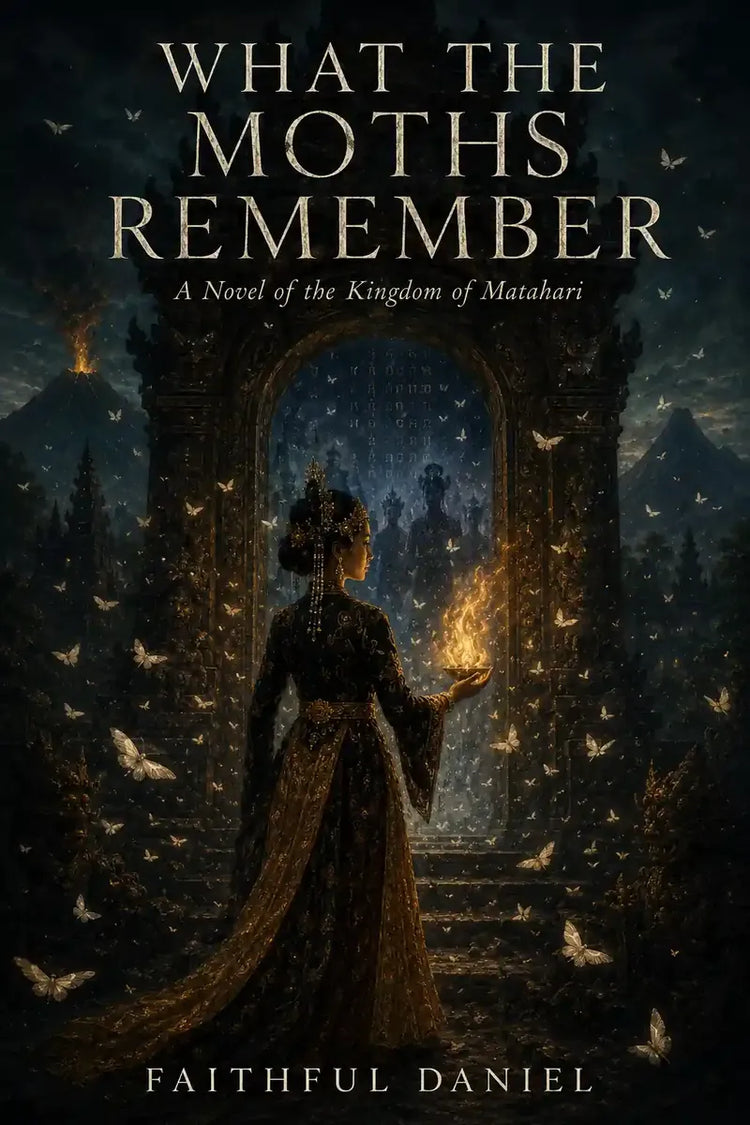
Matahari's most celebrated judge has never returned a wrong verdict — until a dead man starts sending her letters.
In the kingdom of Matahari — where the dead serve as witnesses and the living serve as their translators — Arbiter Larasati is the most feared judge in a generation. Eighteen years. Three hundred verdicts. A record without flaw.
Then the letters begin.
Written in the hand of a man she sentenced to death two years ago, sealed in blue wax, warm to the touch, and patient as stone — the letters arrive every morning with the same quiet precision as his testimony once did. Raden Surya Pranatajaya was not guilty. Larasati knew it when she convicted him. She falsified the spiritual record to protect someone she loved, and the man died for it.
Now his spirit refuses to cross over. And he is not alone. The unjustly dead are gathering around the wound her lie created, the border between worlds is thinning, and the white moths — soul-lures, messengers of unresolved truth — are covering the capital like a second darkness.
The only way to close the wound is a Retrial. A full, public, honest reckoning. Which means telling the kingdom what she did, who she protected, and why — and watching everything she has built come apart in the light of it.
What the Moths Remember is a novel about the distance between the truth and the whole truth, and what lives in the gap between them. Set in a world of ancestor spirits and living judges, volcanic courts and patient ghosts, it asks the question that haunts every system built on human integrity: what happens when the most honest person in the room is the one who lied?